Anterior Shoulder Pain and Subcoracoid Impingement
Overview
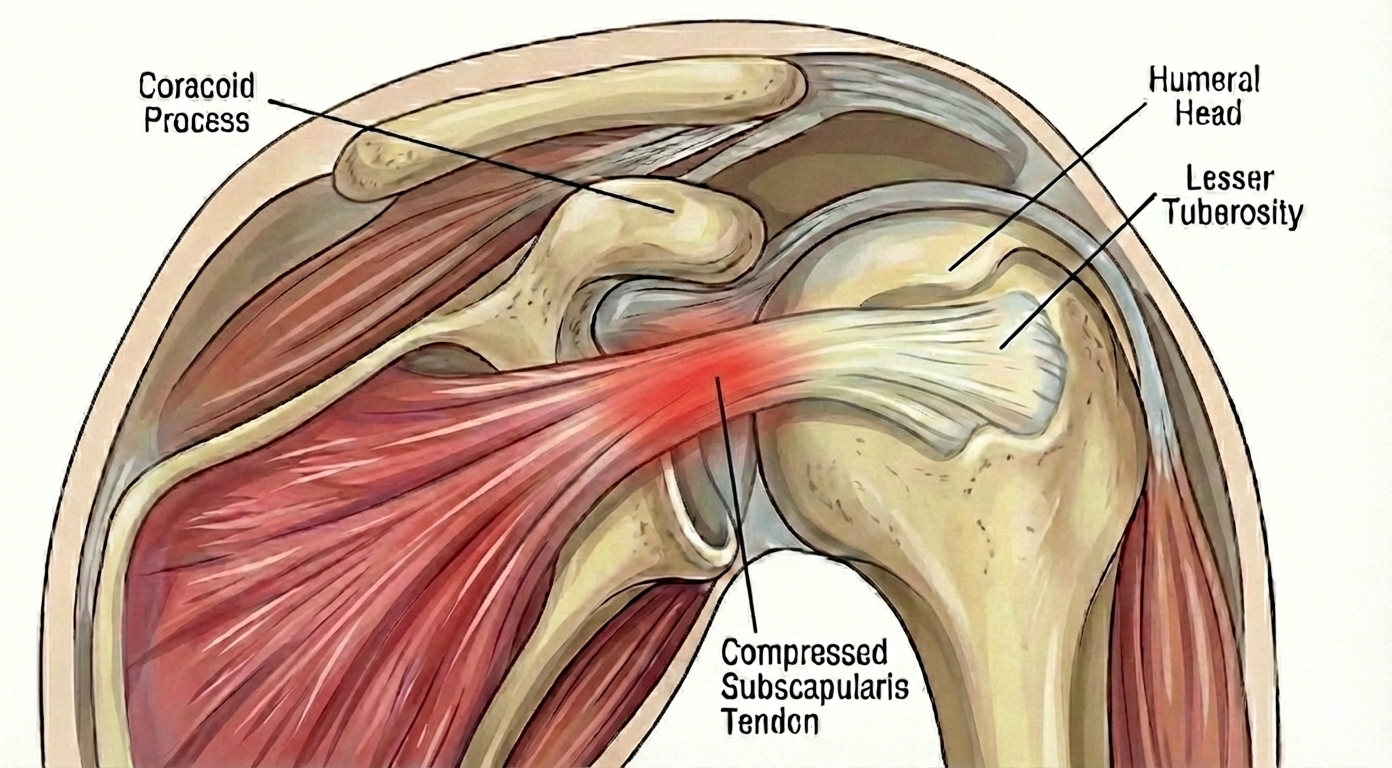
For patients in Richmond, VA seeking specialized care, understanding the mechanics of anterior shoulder pain and subcoracoid impingement is the first step toward recovery. While standard impingement occurs on top of the shoulder, subcoracoid impingement occurs at the front. The coracoid process is a bony hook protruding off the front of the scapula. The subscapularis tendon (a key rotator cuff muscle) runs in the narrow space under this hook.
If this space is anatomically narrow, or if the shoulder is positioned poorly, the tendon can get crushed during internal rotation. This can lead to a subscapularis rotator cuff tear.
Another form of anterior shoulder pain that is similar but not as well recognized occurs after a reverse shoulder arthroplasty. In this procedure, the shoulder joint is replaced and the new implants can impinge on the coracoid or on the conjoined tendon - the tendon that attaches to the coracoid. Alternatively, or additionally, the conjoined tendon can be its own cause of anterior shoulder pain when a reverse shoulder arthroplasty accidentally overlengthens the tendon and it becomes inflammed.
The diagnoses are made with a combination of an exam and advanced imaging such as CT or MRI.
Symptoms
Anterior Pain: Pain specifically at the front of the shoulder, often mistaken for biceps tendonitis.
The "Kennedy-Hawkins" Sign: Pain when the arm is flexed forward and rotated inward.
Cross-Body Pain: Reaching across your body to wash the opposite shoulder is painful.
Neurological Symptoms: The nerves that go to the arm pass by the coracoid and conjoined tendon and can sometimes become irritated during these conditions, resulting in numbness or pins and needles sensations down the arm or in the hand.
Non-Operative Management
Rest, Activity Modification and Medications: These are all simple options that may allow these conditions to get better on their own.
Steroid Injection: A steroid injection (along with the local anesthetic it’s mixed with) can help both diagnose and treat these conditions. If the pain is relieved with the injection in this subcoracoid space then it helps differentiate this anterior shoulder pain from biceps tendonitis or other causes of anterior shoulder pain. The steroid may then also provide sufficient long-term relief.
When is Surgery Needed?
Failed Non-Operative Treatment: When the above nonoperative measures fail after a period of weeks to months and there is persistent pain and disability.
Surgical Solutions
Coracoplasty - An arthroscopic procedure in which the coracoid is shaved to open up the space more and eliminate the impingement. A rotator cuff repair of the subscapularis may need to be done at the same time
Conjoined Tendon Relocation - When the conjoined tendon is involved, usually after a reverse shoulder arthroplasty, a more aggressive coracoplasty can be done and the conjoined tendon can be relocated to a new location so it’s not disconnected, but also no longer able to suffer from any impingement.