Thoracic Outlet Syndrome (TOS)
Overview
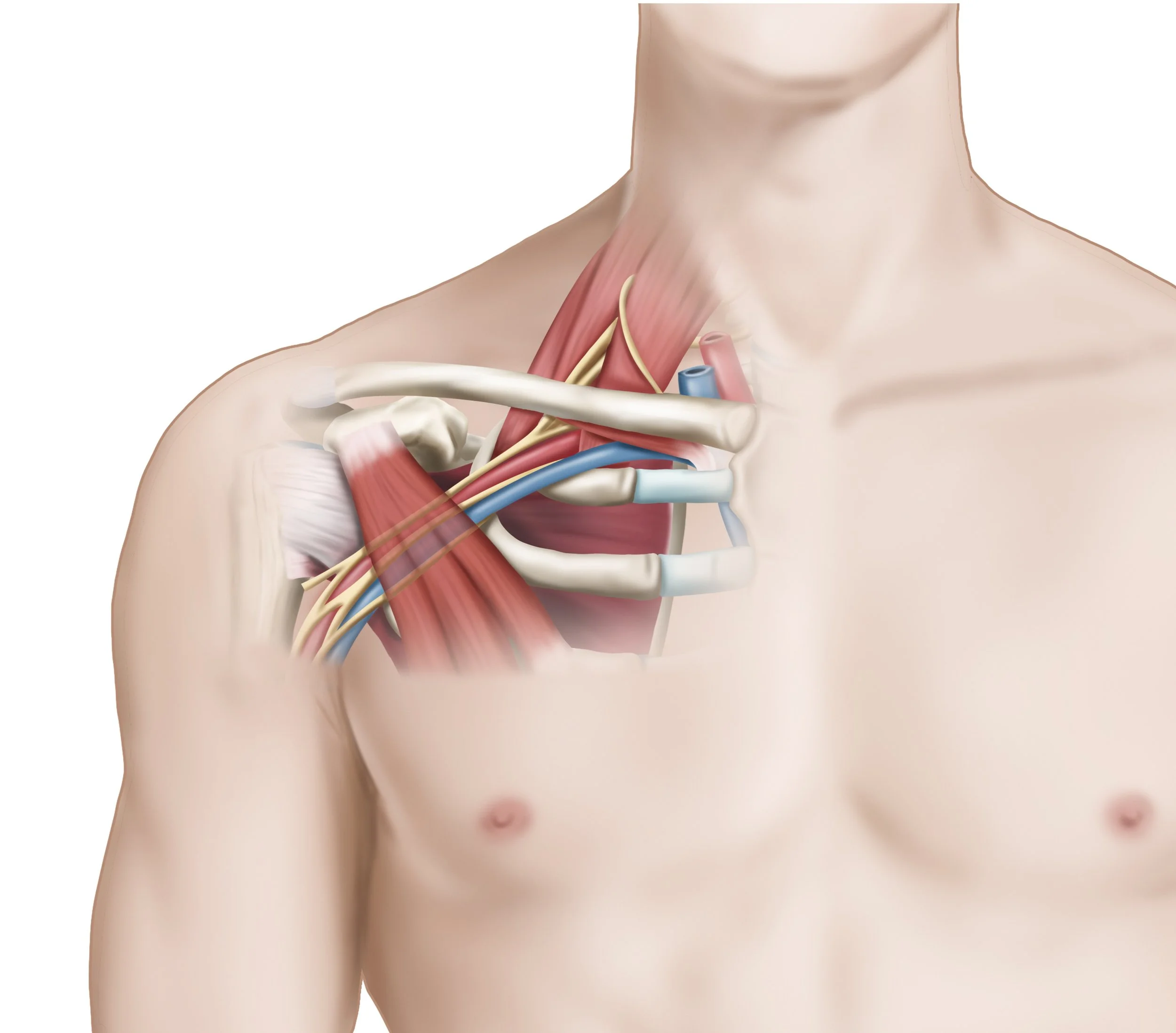
For patients in Richmond, VA seeking specialized care, understanding the mechanics of thoracic outlet syndrome is the first step toward recovery. TOS is a compression of the nerves (Brachial Plexus) or blood vessels as they exit the neck and travel into the arm. The compression typically happens in three tight spaces: the scalene muscles (neck), the first rib/clavicle space, or under the Pectoralis Minor tendon. In the context of scapular pathology, we often see Neurogenic TOS, where tight scapular muscles compress the nerves, causing vague arm pain and winging. The diagnosis and management of TOS can vary widely and so a thorough workup and collaboration with multiple surgeons is always critical.
Dr. Wall manages the type of TOS that is caused by the pectoralis minor. There is a high degree of overlap between this diagnosis and other diagnoses such as functional STAM 1, which is characterized by a hyperactive pectoralis minor pulling the scapula into excessive anterior tilt. The tight pectoralis minor and the abnormally positioned scapula can compress the brachial plexus at this level of the thoracic outlet and produce, usually, neurological symptoms described below. It is important to note that functional STAM 1 can also just be a hyperactive pectoralis minor without any neurological symptoms and therefore would not strictly be considered TOS. The subtleties of these diagnoses are what ultimately require an expert-level, multidisciplinary evaluation.
For more information on this topic, see the American Academy of Orthopaedic Surgeon's educational page here.
Symptoms
Heaviness: The arm feels heavy, tired, or "asleep" when working overhead.
Paresthesias: Numbness and tingling in the pinky and ring finger (ulnar distribution).
Color Changes: (In Vascular TOS) The hand turns blue or cold.
Non-Operative Management
Pec Minor Stretching: Loosening the tight muscles that clamp down on the nerve.
Nerve Gliding: Exercises to mobilize the nerves.
When is Surgery Needed?
Vascular TOS: Almost always surgical (risk of blood clots), however this is usually managed by a thoracic surgeon or hand surgeon.
Neurogenic TOS: If physical therapy fails to relieve the debilitating nerve pain.
Surgical Solutions
Arthroscopic Pectoralis Minor Release: This minimally invasive surgery involves 2-3 small portals on the front of your shoulder. The pectoralis minor tendon is identified where it attaches to the scapula at the coracoid process and it is carefully teased off until it is fully released. The brachial plexus underlying it can then be evaluated and if there is any scar tissue or tight bands, those can be carefully released as well.