Shoulder Bursitis
Overview
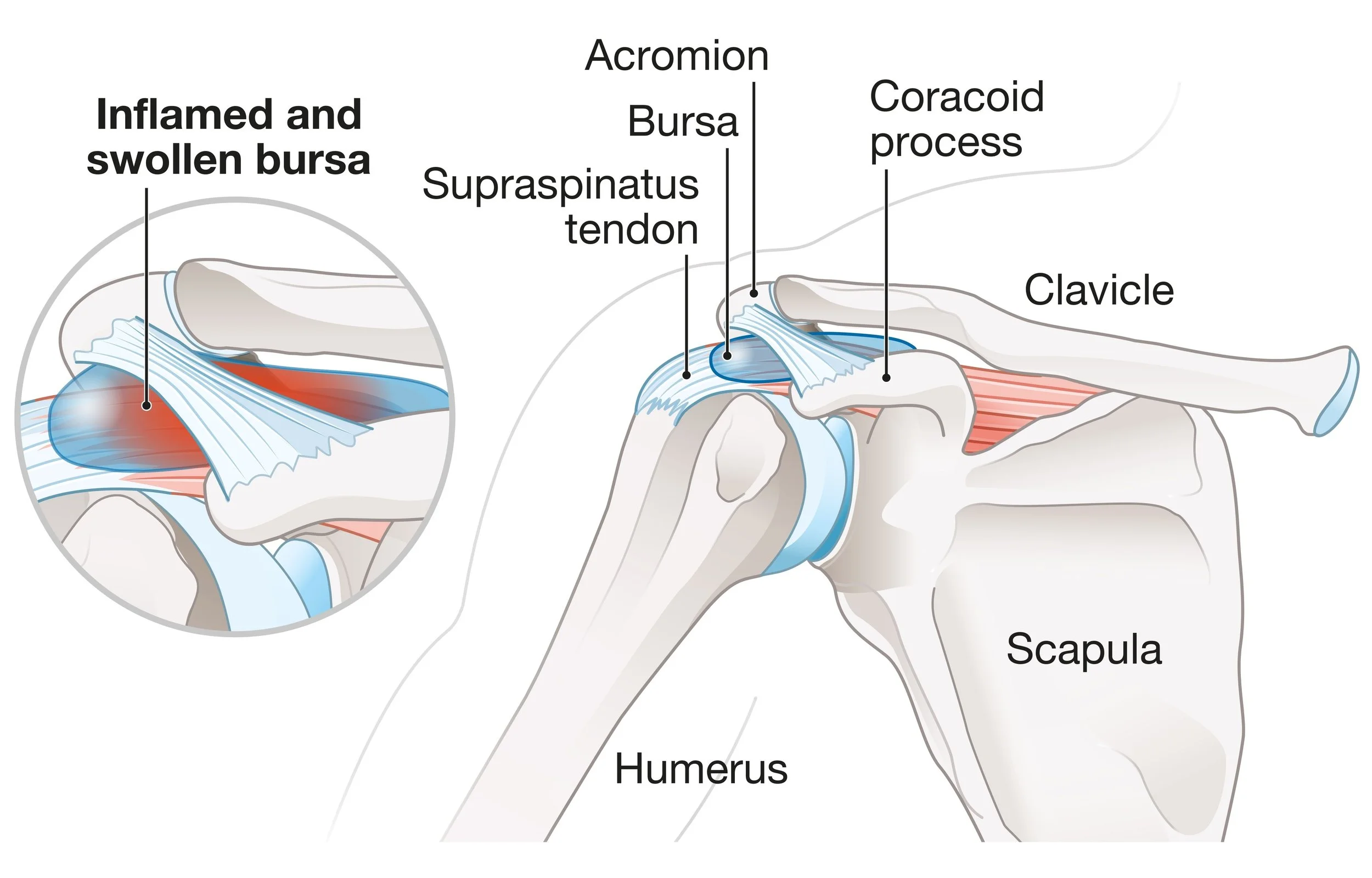
For patients in Richmond, VA seeking specialized care, understanding the mechanics of shoulder bursitis is the first step toward recovery. The bursa is a fluid-filled sac that acts as a gliding surface between the rotator cuff and the bone above it (acromion). Think of it as a lubricated cushion. When this cushion becomes inflamed (bursitis), it swells and thickens. This bursa is located in the subacromial space - below the acromion and above the rotator cuff.
Instead of gliding smoothly, the swollen bursa begins to thicken and can make motion painful. Bursitis is rarely a primary problem; it is almost always a symptom of something else—usually minor impingement, a rotator cuff tear, or overuse.
The diagnosis is sometimes apparent on exam or MRI but this is frequently a diagnosis of exclusion - other, more common conditions need to be ruled out first since bursitis is usually a secondary problem.
Symptoms
Constant Ache: Unlike impingement (which usually hurts with motion), severe bursitis can ache even at rest.
Night Pain: Sleeping on the shoulder compresses the inflamed sac.
Warmth: The shoulder may feel warm to the touch.
Non-Operative Management
Medication: Anti-inflammatories (NSAIDs) are the first line of defense.
Activity Modification: If a certain avoidable activity - such as a recreational sport - is causing the pain, temporarily pausing this activity and resting the shoulder may help.
Steroid Injection: An injection into the subacromial space works like an anti-inflammatory medication, but delivered right to the location of inflammation.
When is Surgery Needed?
Chronic Thickening: Rarely, the bursa becomes persistently thickened and scarred (fibrotic) and must be surgically removed. All nonoperative treatments should be exhausted over weeks to months before this is attempted. Additionally, care must be taken to ensure there is no other condition, such as a rotator cuff tear, that is also present and may need to be addressed.
Surgical Solutions
Shoulder Debridement – A quick, arthroscopic procedure to remove the inflamed tissue. Again, a thorough evaluation for any rotator cuff tear or other problem should occur before surgery. Even when this investigation does not find any tear, a tear still may yet be found during this arthroscopic procedure since the rotator cuff will be seen in even more detail than an MRI can provide.