Sternoclavicular (SC) Joint Injury & Arthritis
Overview
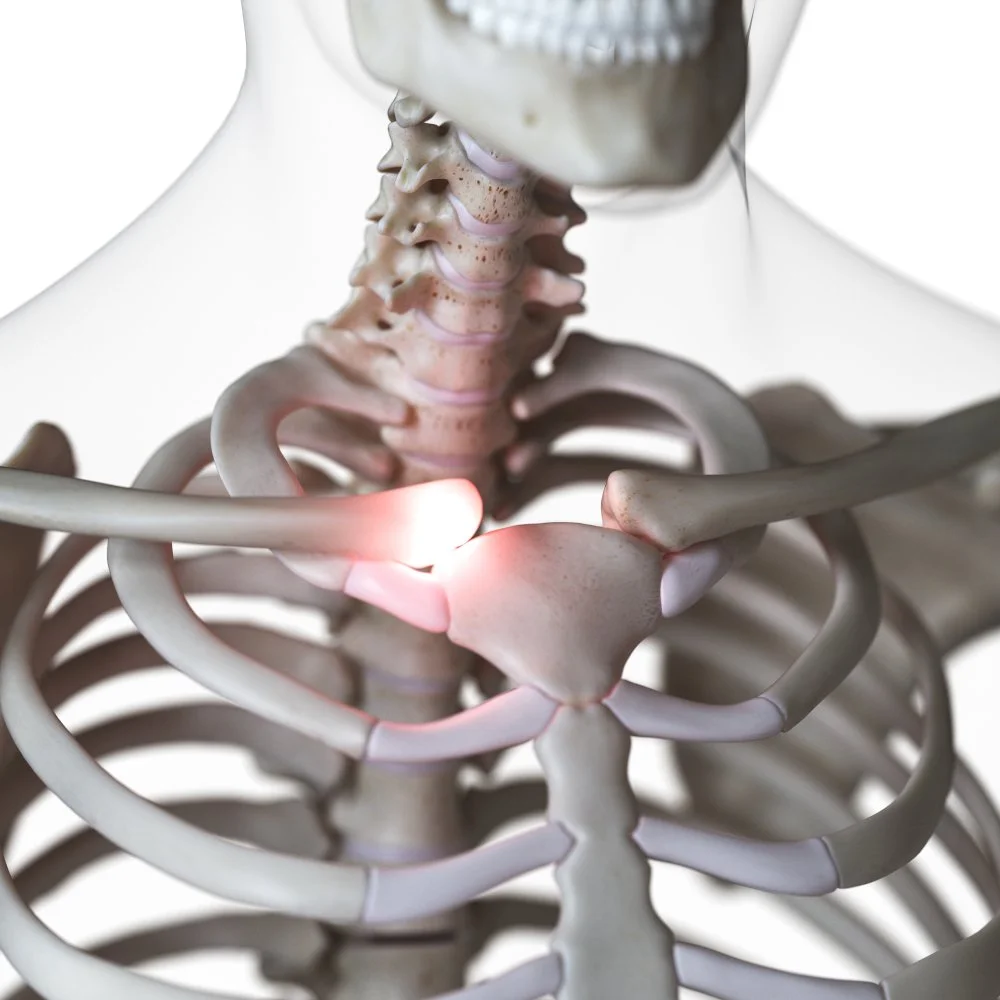
For patients in Richmond, VA seeking specialized care, understanding the mechanics of sternoclavicular joint injuries and arthritis is the first step toward recovery. The sternoclavicular (SC) joint connects the sternum (breastbone) to the clavicle (collarbone). It is the only true joint connecting the arm to the axial skeleton. Two major types of conditions can occur, both of them usually after an injury. It takes massive force (car accident or a significant fall) to injure the SC joint.
The injury most commonly diagnosed is a dislocation, where the clavicle translates out of the space on the sterum where it usually belongs. Dislocations can occur in usually two directions (anterior and posterior) but both require urgent attention at a hospital. Posterior dislocations (inward) are dangerous as they threaten the important blood vessels and airway behind the sternum. Once the dislocation is treated at a hospital, longer term issues can sometimes occur:
Arthritis: Just like arthritis elsewhere in the body, the cartilage in the SC joint can be injured in a trauma and develop persistent pain. Arthritis at this joint can also happen spontaneously, without any history of trauma.
Instability: Usually once an SC joint dislocation is treated and the clavicle is back where it belongs, the surround soft tissue scars in and the joint is largely normal again. Sometimes this fails to occur and the clavicle remains unstable and can toggle back and forth on the sternum.
To make the diagnosis, an exam, x-rays and often a CT scan are necessary.
For more information on this topic, see the American Academy of Orthopaedic Surgeon's educational page here.
Symptoms
Sternoclavicular Prominence: A hard lump at the top of the sternum over this joint.
Clicking: Audible popping when rotating the shoulder.
Pain: This is common directly over the joint and might be worse with shoulder motion.
Non-Operative Management
Physical Therapy: Designed to help stretch any tight muscles and strengthening some of the surrounding muscles that can help patients adapt to these conditions.
Medications: Anti-inflammatories (NSAIDs) can help with the pain.
Steroid Injections: Just like NSAIDs, steroids are anti-inflammatory and can make the pain at the SC joint better.
When is Surgery Needed?
When non-operative measures have failed over the course of weeks to months and patients have persistent pain and disability.
Surgical Solutions
SC Joint Resection and Meniscus Allograft Interposition – This procedure is a treatment option for SC joint arthritis. It involves removing a small amount of the collarbone to make space for a meniscus graft to be placed into the joint to act as a bumper between the two bones.
SC Joint Reconstruction – This procedure is a treatment option for SC joint instability. It involves surgically re-stabilizing the joint.