Proximal Humerus Fractures
Overview
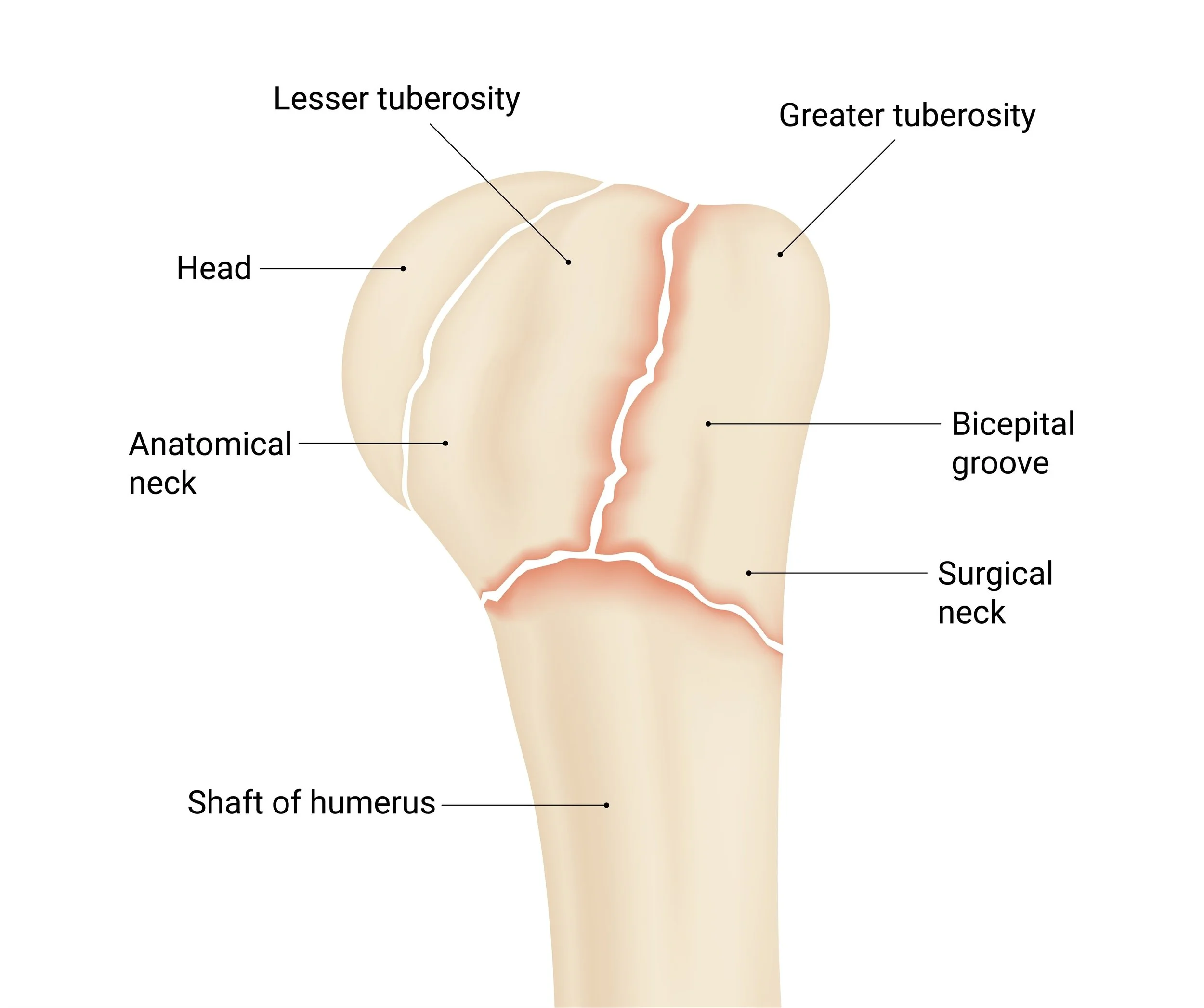
For patients in Richmond, VA seeking specialized care, understanding the mechanics of proximal humerus fractures is the first step toward recovery. The proximal humerus is top of the humerus bone, and ends in the humeral head, the "ball" of the shoulder joint. Fractures here fall into two distinct populations:
Low-Energy (Elderly): Often related to osteoporosis, where a simple fall from standing can fracture the weakened bone.
High-Energy (Young): Trauma from car accidents, falls from height, or other significant mechanisms.
These fractures can occur in multiple different patterns. The bone can break into two, three or four distinct pieces and every piece can move freely. Displacement is when a piece physically travels away from where it belongs. Angulation describes the rotation of one of the fractured pieces. Both factors are important considerations when evaluating these injuries and their likelihood to heal and provide good outcomes.
The critical concern with getting these fractures to heal is blood supply. The blood flow to the humeral head is precarious; in certain fracture patterns, the vessels can be disrupted, and the ball can die and collapse months or years later. Fortunately, this complication is not as common and even when these fractures have a high degree of displacement or angulation, patients will still heal them and have adequate function.
To make the diagnosis, an x-ray is required and a CT is also usually obtained.
Symptoms
Pain: There will be immediate pain and inability to move the arm.
Massive Bruising: Ecchymosis that travels down the arm and onto the chest wall.
Swelling: The shoulder appears swollen and loses its definition. This swelling can extend all the way to the hand but is temporary.
Nerve Injury: Numbness over the side of the shoulder is common.
Non-Operative Management
Hanging Arm Cast/Sling: Gravity is used to gently pull the bone straight. Most elderly fractures are stable enough to heal with simple immobilization.
Early Motion: Starting pendulum exercises and working with a physical therapist early is critical to prevent a frozen shoulder.
When is Surgery Needed?
Displaced Parts: If the "tuberosities" (where the rotator cuff attaches) are pulled off the bone, the rotator cuff cannot function.
Head-Splitting Fractures: If the ball itself is split, the cartilage surface is destroyed.
Dislocations: With some fracture patterns, the humeral head (the ball of the shoulder joint) can be so far displaced that it leaves the socket. Even if the bones heal with this fracture pattern, the shoulder joint cannot function properly if the ball is not in the socket.
Surgical Solutions
Proximal Humerus Fixation – Plating the bone back together and holding it with metal plates and screws This is a better option for younger patients. In older patients, the bone is often not strong enough and the screws may cut through it over time.
Reverse Shoulder Arthroplasty for Fracture – This is a better option for elderly patients or severe fracture types. It involves replacing the entire shoulder joint so it can function well again.