Pectoralis Major Rupture
Overview
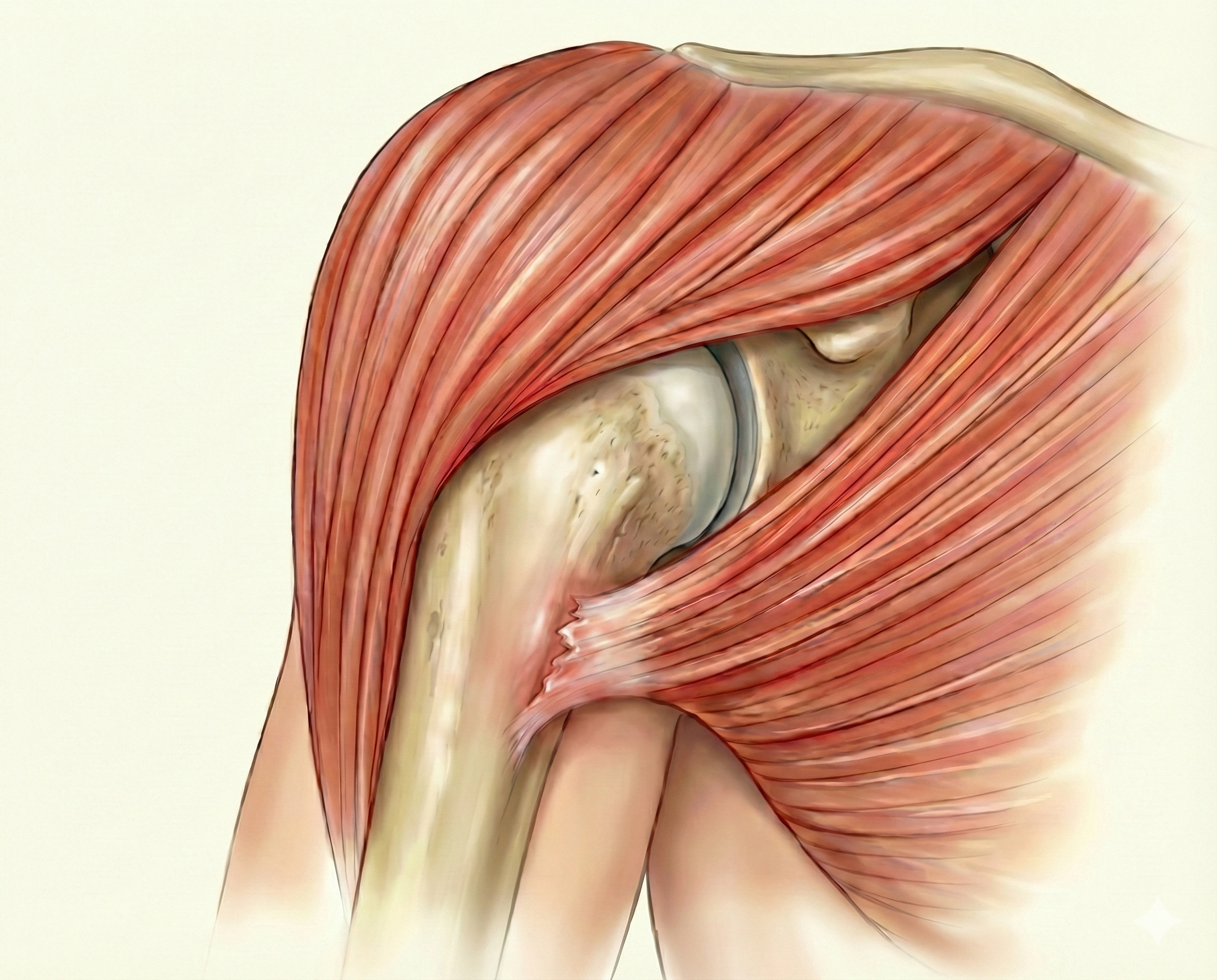
For patients in Richmond, VA seeking specialized care, understanding the mechanics of pectoralis major ruptures is the first step toward recovery. The pectoralis major is the large chest muscle responsible for pushing and hugging motions. Ruptures, also called tears, almost exclusively occur in the sternal head (the lower portion) of the tendon. This is a classic "weightlifter's injury," typically happening during a heavy bench press or eccentric loading (lowering a heavy weight).
When the tendon tears off the humerus (arm bone), the muscle retracts toward the chest wall. While patients can still function for many daily activities using the clavicular (upper) head, they lose significant power in pushing and internal rotation. This diagnosis is often detectable on a physical exam but ultimately requires an MRI.
For more information on this topic, see the American Academy of Orthopaedic Surgeon's educational page here.
Symptoms
The "Pop": A painful sensation of tearing or snapping during a heavy lift.
Bruising: Massive bruising extending down the arm and across the chest wall.
Deformity: Loss of the "axillary fold" (the web of skin at the front of the armpit). The muscle may look bunched up on the chest
Non-Operative Management
Patient Selection: Older, lower-demand patients may tolerate the weakness well and do not strictly require repair.
Partial Tears: Strains at the muscle-tendon junction (muscular tears) cannot be sutured and heal with rest.
Medications and Physical Therapy: If non-operative management is chosen - either as the definitive treatment or as a trial for more chronic tears - anti-inflammatories may help with the pain while physical therapy helps strengthen the surrounding muscles.
When is Surgery Needed?
Acute Ruptures: Ideally performed within the first few weeks before the tendon scars down and retracts.
Active Patients: Anyone wishing to return to gym activities, manual labor, or sports requires repair to restore strength and anatomy.
Surgical Solutions
Pectoralis Major Repair – Open surgery to reattach the tendon to the humerus using buttons or anchors.