Clavicle (Collarbone) Fractures
Overview
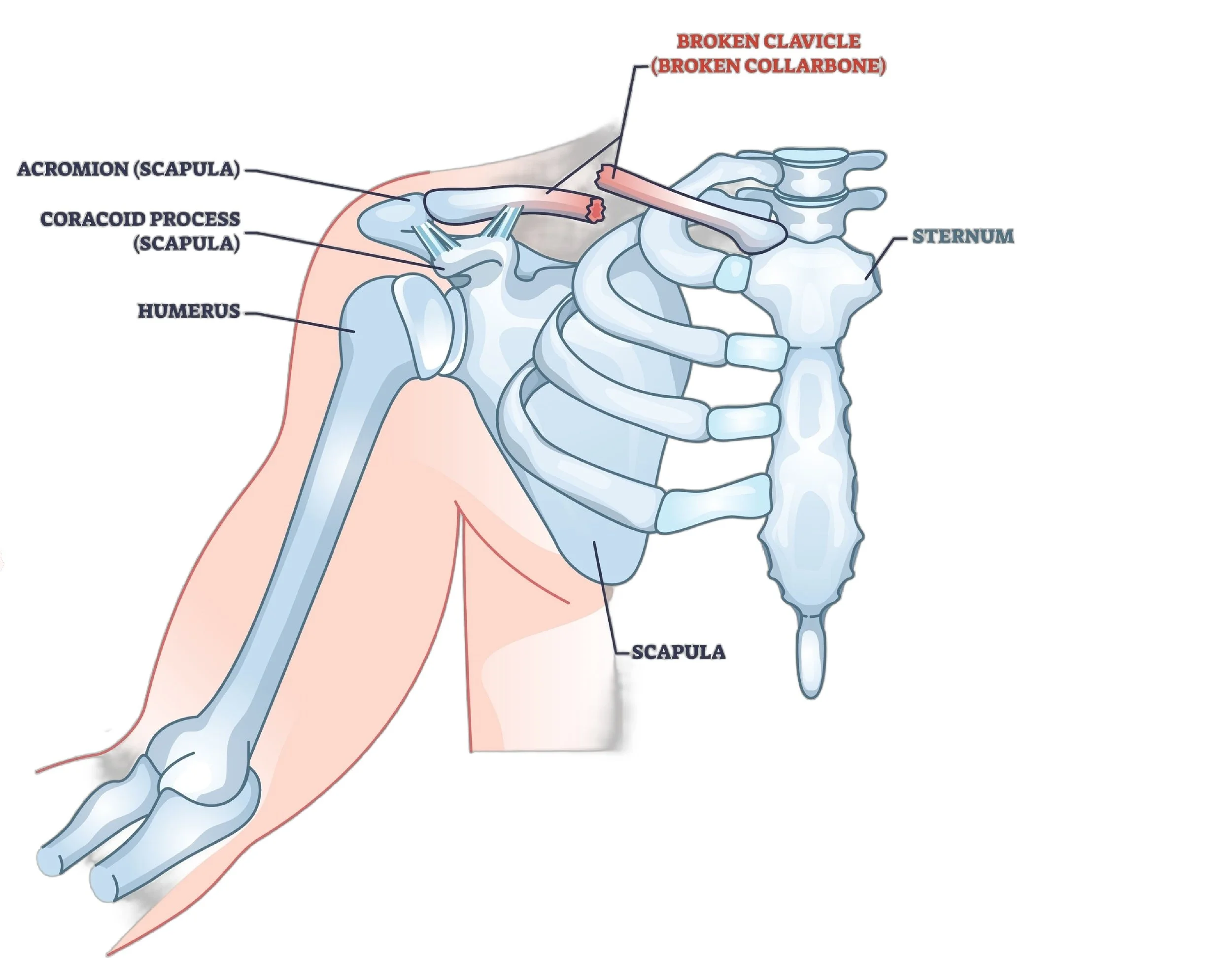
For patients in Richmond, VA seeking specialized care, understanding the mechanics of clavicle fractures is the first step toward recovery. The clavicle (also called a collarbone) acts as the only bony strut connecting your arm to your body. It serves to keep the shoulder pushed back and away from the chest, optimizing the function of the muscles. Because of its prominent position and lack of soft tissue coverage, it is one of the most frequently broken bones in the body.
Most fractures occur in the middle third of the bone (mid-shaft). While many can heal without surgery, fractures that are significantly displaced (ends not touching) or shortened (overlapping) can lead to "malunion." A malunion is when a bone heals but not in its proper shape. It changes the mechanics of the shoulder girdle, and can lead to chronic fatigue, weakness, and a visible deformity. In significantly displaced fractures, or in patients who smoke or otherwise have difficulty healing, a “nonunion” can also occur, which is when the bone does not heal, even after many months, and will often result in persistent fatigue, weakness and pain at the fracture site.
Some clavicle fractures are visibly apparent but the final diagnosis must be made with x-rays.
For more information on this topic, see the American Academy of Orthopaedic Surgeon's educational page here.
Symptoms
Pain: Patients will have immediate pain right at the site of the fracture.
Visible Deformity: A bump in the skin where the bone end is pushing upwards.
Shoulder Slump: The shoulder on the affected side may sag forward and inward.
Grinding: A palpable crunching sensation (crepitus) when trying to move the arm.
Non-Operative Management
Sling Immobilization: For non or minimally displaced fractures, a sling is worn for a few weeks to provide some stability for the bone to begin to heal to itself.
Acceptance of Deformity: Non-operative treatment may result in a bump, which is cosmetic but usually functional in lower-demand patients.
When is Surgery Needed?
Significant Shortening or Displacement: If the bone fragments are not close enough together or the overall length of the clavicle would be significantly shortened if it healed as it was, the shoulder mechanics could be permanently altered.
Skin Tenting: Imminent risk of the bone poking through the skin (open fracture).
"Floating Shoulder": If certain other structures around the shoulder, such as the scapula, are also injured, the arm loses its connection to the rest of the skeleton entirely.
Surgical Solutions
Clavicle Fixation – Realignment and fixation of the bone using a low-profile plate and screws.