Clavicle Fracture Fixation
The Goal
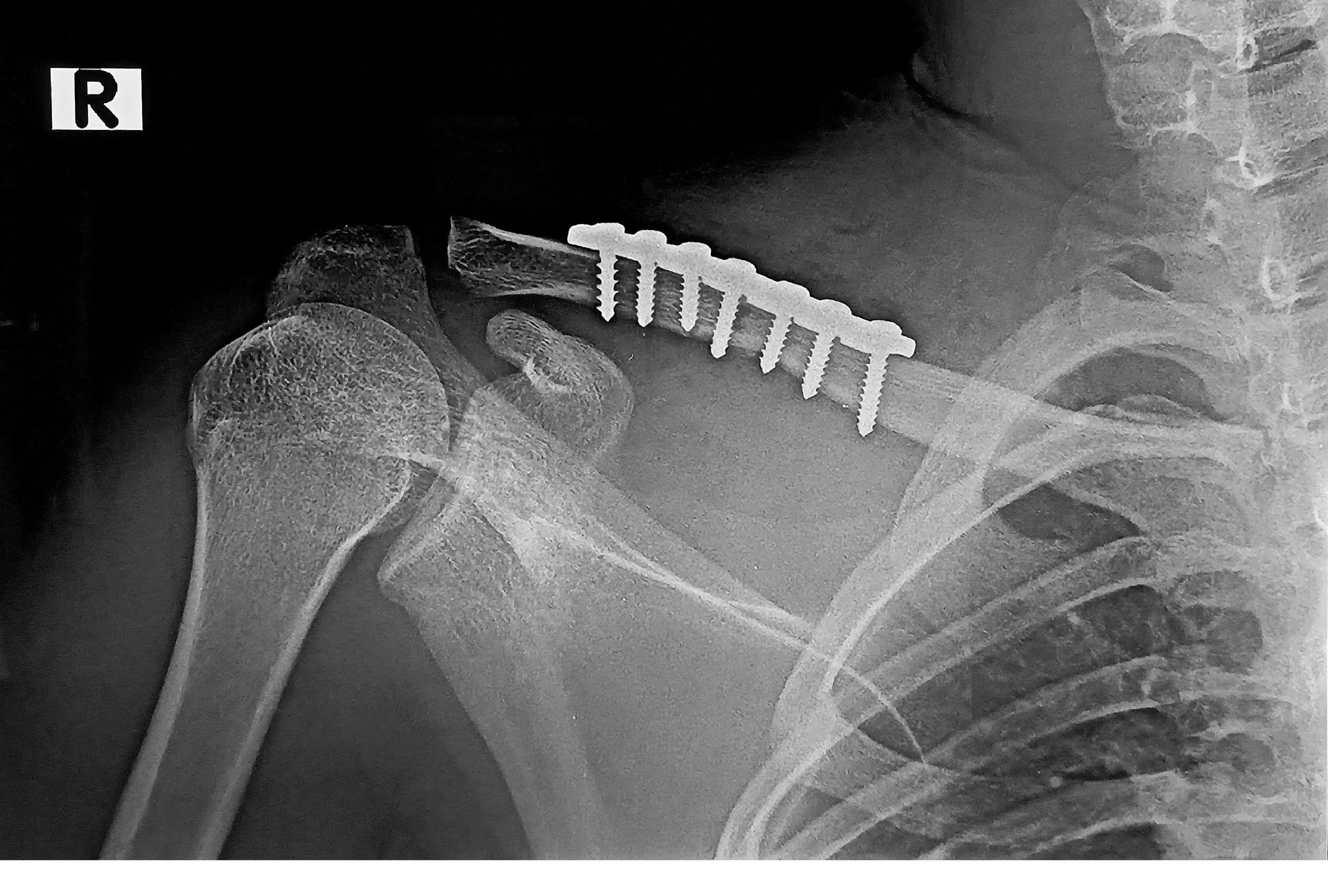
Dr. Kevin Wall provides specialized, fellowship-trained surgical treatment for Clavicle Fracture ORIF to restore function and relieve pain for patients in Richmond, VA, and the surrounding Central Virginia communities. The goal of this procedure is to restore the anatomical alignment of a fractured clavicle (collarbone) and provide immediate stability for healing. While many clavicle fractures can heal in a sling, displaced or shortened fractures often result in a "malunion" or "nonunion," which can lead to chronic weakness, shoulder asymmetry, and persistent pain. By utilizing plate and screw fixation, we can precisely realign the bone, neutralize the deforming forces of the neck and chest muscles, and allow for a significantly earlier return to motion and daily activities.
This page is designed to educate you specifically about this procedure. Additional information that generally applies to most of Dr. Wall’s surgeries can be found on these pages:
The Procedure
The Approach: A horizontal incision is made over the top of the collarbone to carefully expose the fracture site while protecting the underlying nerves.
Reduction: Dr. Wall meticulously realigns the bone fragments to their original length and orientation, which is critical for maintaining proper shoulder mechanics.
Fixation: A low-profile, contoured titanium or stainless steel plate is secured across the fracture using multiple screws. This acts as an internal scaffold, providing rigid stability that allows the bone to knit back together. For complex fractures or poor bone quality, specialized "locking plates" are used to ensure the screws do not loosen during the healing process.
Post-Op Protocol
Phase 1 (0–4 weeks): A sling is worn for comfort and protection when you are not performing hygiene or therapy exercises. You will begin progressive passive, active-assist, and active motion as tolerated, focusing on the elbow, wrist, and hand. No lifting, pushing, pulling, or weightbearing is permitted during this initial phase.
Phase 2 (4–8 weeks): Formal physical therapy typically begins at Week 2 with gentle motion exercises. During this phase, you will begin weaning from the sling and progress with passive and active range of motion. Gentle strengthening of the shoulder blade (scapula) and elbow begins.
Phase 3 (8–12 weeks): After X-rays confirm the bone has healed, and full range of motion is achieved, you will begin formal shoulder strengthening. Lifting remains limited to less than 5 lbs during this time.
Phase 4 (12–16+ weeks): You will continue progressive strengthening with the goal of returning to all activities of daily living. A full return to labor-intensive work or collision sports typically occurs after 16 weeks, once strength is fully restored.
When to Seek Care
You should schedule a consultation if:
You have a visible "tenting" of the skin or a significant deformity over your collarbone after a fall.
You feel a painful clicking, shifting, or grinding sensation when moving your arm.
You have been told you have a "displaced" clavicle fracture and want a specialist opinion on operative versus non-operative management.