Trapezius Strain/Whiplash
Overview
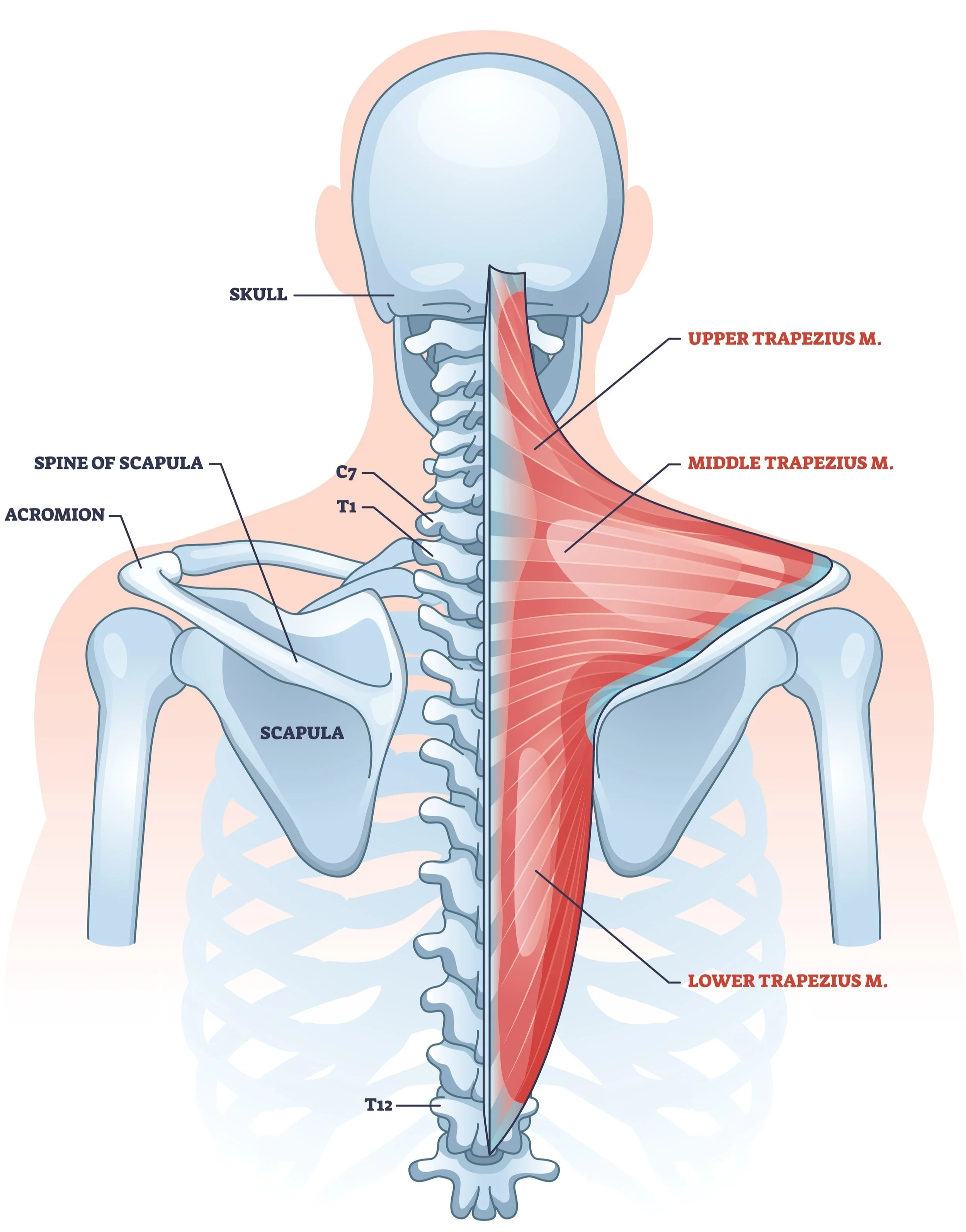
For patients in Richmond, VA seeking specialized care, understanding the mechanics of trapezius strain is the first step toward recovery. It is critical to distinguish a trapezius strain from trapezius paralysis. A strain is a mechanical tear of the muscle fibers, usually from lifting or acute trauma. The nerve is intact, meaning the muscle can still fire, but it is painful and inhibited. In trapezius paralysis (spinal accessory nerve injury) the muscle cannot fire at all. Trapezius strain is also sometimes called whiplash or trapezial myofascial pain.
For more information on this topic, see the American Academy of Orthopaedic Surgeon's educational page here.
Symptoms of Strain
Pain with Activation: Shrugging the shoulder hurts, but the muscle contracts. In paralysis, there is no contraction.
Localized Tenderness: Sharp pain at the "knot" in the upper trap.
No Winging: A simple strain rarely causes the scapula to wing or droop significantly.
Management
Rest & Ice: Standard muscle recovery protocols.
Trigger Point Injections: To release the spasm.
Physical Therapy: Soft tissue mobilization stretching and strengthening can help and dry needling can be particularly beneficial.
Surgery: Surgery is almost never indicated for a trapezius strain. It heals with time.